FHC RADIO

Tuesday, December 30, 2025

THE BIGGER CON: WHO LIVES ON PUBLIC MONEY


THE LIE THAT FED A NATION — AND STARVED THE TRUTH


THE WELFARE QUEEN MYTH — BUILT IN THE 1970s

The modern lie took shape during Ronald Reagan’s 1976 presidential campaign, when he began telling stories of a mythical “welfare queen” in Chicago—Black, fraudulent, lavish.

The problem? THE LIE THAT FED A NATION — AND STARVED THE TRUTH


By SDC News One

“If you can convince the lowest white man he’s better than the best colored man, he won’t notice you’re picking his pockets. Hell, give him somebody to look down on, and he’ll empty his pockets for you.”
— Lyndon B. Johnson, 1960s (recounted by Bill Moyers)

APACHE JUNCTION, AZ [IFS] -- That sentence is not a metaphor. It is a manual.
And America has followed it faithfully for more than four centuries.

1619–1865: THE ORIGINAL ECONOMIC SCAM

In August 1619, the first enslaved Africans were sold in English-controlled Virginia. For the next 246 years, Black labor was unpaid, uncompensated, and foundational. Cotton alone accounted for over 50% of U.S. exports by 1860. No wages. No land. No inheritance.

When slavery ended in 1865, freedom came without resources. Promised land—40 acres and a mule—was revoked by President Andrew Johnson in 1865, returning land to former Confederates instead.

That decision created a racial wealth gap that has never closed.

RECONSTRUCTION TO JIM CROW: CRIMINALIZING SURVIVAL

From 1865–1877, Black Americans briefly entered political life during Reconstruction. That window slammed shut with:

  • The Compromise of 1877

  • The withdrawal of federal troops

  • The rise of Black Codesconvict leasing, and Jim Crow

Black survival was rebranded as criminality.

White poverty? Explained away.
Black poverty? Weaponized.

THE MEDIA WARNING WE IGNORED

By the early 1960s, Malcolm X called it out plainly:

“The media’s the most powerful entity on earth. They have the power to make the innocent guilty and the guilty innocent… and make you love the oppressor and hate the oppressed.”

That wasn’t rhetoric. It was prophecy.

THE WELFARE QUEEN MYTH — BUILT IN THE 1970s

The modern lie took shape during Ronald Reagan’s 1976 presidential campaign, when he began telling stories of a mythical “welfare queen” in Chicago—Black, fraudulent, lavish.

The problem?

  • The woman he referenced was not representative

  • Fraud rates were statistically tiny

  • The imagery stuck anyway

By the time Reagan became president in January 1981, the damage was done.

WHAT THE DATA ACTUALLY SHOWS

Using USDA and Census data (FY 2023):

SNAP Participation by Race

  • White (non-Hispanic): 35.4%

  • Black (non-Hispanic): 25.7%

  • Hispanic/Latino (any race): 15.6%

  • Others combined: under 10%

In raw numbers:

  • ~15 million White Americans

  • ~10 million Black Americans

Yes, per capita, Black Americans are overrepresented—but that’s tied directly to:

  • Lower median wealth (10:1 gap)

  • Hiring discrimination

  • Housing segregation

  • Generational asset denial

SNAP benefits are capped.
No one is getting $4,000 a month. The maximum SNAP allotment in 2024 for a family of four is under $1,000before deductions. Most households receive far less.

WHO REALLY DESIGNED THE SYSTEM

SNAP (originally food stamps) was created in 1939—primarily to stabilize white rural farmers during the Great Depression.

Social Security (1935)?

  • Excluded domestic and agricultural workers → most Black workers at the time

The GI Bill (1944)?

  • Administered locally → Black veterans denied mortgages and education

Student loans exploded after Reagan-era cuts to public education funding in the 1980s, shifting costs onto individuals—disproportionately harming Black families with no intergenerational wealth cushion.

THE TRUMP YEARS: MASKS OFF

During 2017–2021, SNAP work requirements were tightened, benefits delayed, and rhetoric escalated—until COVID hit.

Then something happened.

When benefits were paused or delayed in 2020, complaints flooded online—from white households who had never been publicly associated with assistance. When benefits resumed, the visibility changed.

The myth cracked.

Assistance had always been multiracial.
It had just been hidden behind credit cards, online ordering, and silence.

THE BIGGER CON: WHO LIVES ON PUBLIC MONEY

Let’s be clear:

  • The White House is publicly funded housing

  • Congressional salaries, healthcare, security, and meals are taxpayer funded

  • Corporate welfare and subsidies dwarf SNAP spending

Yet the anger is aimed downward, not up.

That is the Johnson quote in motion.

PRICES, POWER, AND PUNISHMENT

Grocery inflation post-COVID wasn’t accidental.

  • Consolidation

  • Price-setting

  • Record profits for food conglomerates (2021–2023)

Raising prices on the very people who created the demand is not economics—it’s extraction.

Government competition—public groceries, permanent public housing—would lower prices. That’s why it’s resisted.

PROJECT 2025 AND THE ENDGAME

What’s being proposed now isn’t reform—it’s removal.

  • SNAP cuts

  • Housing rollbacks

  • Deregulation favoring monopolies

If benefits disappear, it won’t be accidental.
It will be by design.

And history shows: when systems collapse, the poorest suffer first—but not alone.

THE FINAL TRUTH

Black Americans did not create this system.
They survived it.

They were blamed for it.
They were studied, policed, mocked, and mythologized inside it.

And still—taught their children.
Still—fed communities.
Still—built culture the world consumes daily.

This isn’t about envy.
It’s about exposure.

The lie worked for generations.
It’s working less now.

And that’s why the backlash is so loud.

Truthful facts matter.
History matters.
And lies don’t survive timelines.

- 30 -

Monday, December 29, 2025

When Law and Order Failed: Wilmington 1898 and the American Pattern We Were Never Taught

 When Law and Order Failed: Wilmington 1898 and the American Pattern We Were Never Taught

By SDC News One IFS News Staff Writers


WILMINGTON, N.C. [IFS] -— On November 10, 1898, in the port city of Wilmington, North Carolina, armed white mobs overthrew a democratically elected, multiracial local government. It remains the only successful coup d’état in United States history. For decades, it was misnamed a “race riot,” buried in textbooks, and softened by euphemisms. The truth is harsher—and more instructive.


That morning, following weeks of coordinated propaganda and intimidation, white supremacists led by prominent businessmen, politicians, and newspaper editors marched through Wilmington. They burned the offices of The Daily Record, the city’s Black-owned newspaper, then hunted Black citizens through the streets. At least 60 people were killed—some estimates are higher. Black leaders were forced onto trains at gunpoint and exiled. By nightfall, the city’s elected officials had resigned under threat, replaced by men who had not won the vote.

The United States government did not intervene to restore lawful governance. Federal troops stationed nearby did not protect the elected officials or the Black residents who were targeted. Order was “restored,” but only after power was handed to the perpetrators.

This was not an accident. It was policy by neglect.

A Prosperous City, a Manufactured Fear

In the 1890s, Wilmington was a majority-Black city with a thriving Black middle class. Black citizens owned businesses, edited newspapers, served on juries, and held elected office. A fusion coalition of Republicans and Populists—Black and white—governed the city.

That success became the excuse.

White supremacist leaders stoked fears of “Negro Rule,” a phrase repeated relentlessly in editorials and speeches throughout 1898. Josephus Daniels of the Raleigh News & Observer and Alfred Moore Waddell, a former congressman, amplified lies about Black political power and fabricated threats to white womanhood. These narratives were not spontaneous prejudice; they were organized disinformation campaigns.

On November 8, 1898, Fusionists won the election. Two days later, the coup unfolded.


Selective Law and Order

The lesson Wilmington teaches—one reinforced across American history—is not merely that violence occurred, but that the state chose whom to protect.

When white supremacists seized city hall, there were no mass arrests of the ringleaders. When Black families fled into swamps and marshes to escape gunfire, there was no federal rescue. When lawful governance was dismantled, Washington remained silent.

Law and order, in this moment, was not neutral. It was conditional.

In the years that followed, North Carolina and other Southern states codified white supremacy through Jim Crow laws, literacy tests, poll taxes, and grandfather clauses. The coup worked. Black political power collapsed statewide by 1900. What could not be taken by the ballot was taken by force—and then legalized.


The Long Shadow

The economic consequences were devastating. Black-owned businesses were destroyed or abandoned. Property was seized. Families lost generational wealth that could never be recovered. Wilmington, once a beacon of Black prosperity, became a warning.

University of North Carolina Wilmington scholars, historians, and alumni—working more than a century later—helped bring the truth back into public view through rigorous research and public history projects, including PBS’s American Experience: Wilmington 1898. Their work stands as a reminder that history does not correct itself. People do.

Memory, Markets, and Silence

For many North Carolinians, this history is not abstract.

In Fayetteville, North Carolina, a slave market house still stands in the city’s center—often mischaracterized in public memory. For descendants of slavery, it is not a relic; it is a wound. One such descendant traces their great-great-grandfather, Peter Jones, to that very site—sold not once, but twice. The building remained. The truth did not.

“I grew up here,” the descendant said. “A lot of people who went to public school had no idea what kind of market house they were glorifying.”

This is how erasure works—not only through lies, but through omission.

The Bible Belt on Trial

The Wilmington coup also exposes a moral contradiction at the heart of the so-called Bible Belt. Many of the men who orchestrated the violence framed themselves as defenders of Christian civilization. Churches did not stop the coup. Scripture was invoked, not to protect the vulnerable, but to sanctify power.

If faith is measured by deeds, Wilmington places American Christianity on trial—and the verdict remains unsettled.

Who Writes History

“The winners of every war rewrite history.”

For decades, the coup’s winners did just that. Schoolchildren were taught myths. Newspapers softened language. The massacre became a “riot.” The overthrow became “redemption.” Those lies were repeated through the most vulnerable, unquestioning years of childhood and early adulthood.

The anger many Americans feel today is not rooted in learning history—it is rooted in discovering how thoroughly they were misled.

An Uneasy Truth

The United States can still be both deeply flawed and profoundly powerful. Many who criticize its past do so because they believe in its promise. Women and girls—one of the largest marginalized groups in the country—know what it means to live under systems that claim equality while practicing exclusion. So do descendants of slavery. So do communities erased from their own stories.

Wilmington 1898 teaches a hard lesson: democracy is not self-enforcing. When the government fails to act impartially—when it restores order only for some—violence becomes policy by another name.

History is not meant to comfort us. It is meant to warn us.

And until the truth is taught plainly, without euphemism or excuse, Wilmington will not remain a single coup in American history—but a recurring pattern we refuse to name.

- 30 -

Monday, December 8, 2025

Diego María


Diego María de la Concepción Juan Nepomuceno Estanislao de la Rivera y Barrientos Acosta y Rodríguez, known as Diego Rivera (December 8, 1886  November 24, 1957) was a prominent Mexican painter and the husband of Frida Kahlo. His large wall works in fresco helped establish the Mexican Mural Movement in Mexican art. Between 1922 and 1953, Rivera painted murals among others in Mexico City, Chapingo, Cuernavaca, San Francisco, Detroit, and New York City. In 1931, a retrospective exhibition of his works was held at the Museum of Modern Art in New York City.

Early life

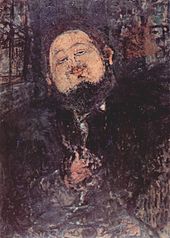
Amedeo ModiglianiPortrait of Diego Rivera1914

Diego Rivera was born in GuanajuatoMexico to a well-to-do family. Diego had a twin brother named Carlos, who died two years after they were born.From the age of ten, Rivera studied art at the Academy of San Carlos in Mexico City. He was sponsored to continue study in Europe by Teodoro A. Dehesa Méndezthe governor of the State of Veracruz

His mother was a Converso, a Jew whose ancestors had been forced to convert to CatholicismSpeaking about himself, Rivera wrote in 1935: "My Jewishness is the dominant element in my life."

After arrival in Europe in 1907, Rivera initially went to study with Eduardo Chicharro in MadridSpain, and from there went to Paris, France, to live and work with the great gathering of artists in Montparnasseespecially at La Ruchewhere his friend Amedeo Modigliani painted his portrait in 1914. His circle of close friends, which included Ilya EhrenburgChaim SoutineAmedeo Modigliani and Modigliani's wife Jeanne HébuterneMax Jacobgallery owner Léopold Zborowski, and Moise Kislingwas captured for posterity by Marie Vorobieff-Stebelska (Marevna) in her painting "Homage to Friends from Montparnasse" (1962).

In those years, Paris was witnessing the beginning of cubism in paintings by such eminent painters as Pablo Picasso and Georges BraqueFrom 1913 to 1917, Rivera enthusiastically embraced this new school of art. Around 1917, inspired by Paul Cézanne's paintings, Rivera shifted toward Post-Impressionism with simple forms and large patches of vivid colors. His paintings began to attract attention, and he was able to display them at several exhibitions.

Sunday, December 7, 2025

Willa Sibert Cather

 "The earth was warm under me, and warm as I crumbled it through my fingers...I kept as still as I could. Nothing happened. I did not expect anything to happen. I was something that lay under the sun and felt it, like the pumpkins, and I did not want to be anything more. I was entirely happy. Perhaps we feel like that when we die and become a part of something entire, whether it is sun and air, or goodness and knowledge.  At any rate, that is happiness; to be dissolved into something complete and great. When it comes to one, it comes as naturally as sleep."

— Willa Cather, My Antonia


Willa Sibert Cather (/ˈkæðər/;[1] December 7, 1873 – April 24, 1947) was an American writer who achieved recognition for her novels of frontier life on the Great Plains, including O Pioneers! (1913), The Song of the Lark (1915), and My Ántonia (1918). In 1923 she was awarded the Pulitzer Prize for One of Ours (1922), a novel set during World War I.

Cather grew up in Virginia and Nebraska and graduated from the University of Nebraska–Lincoln. She lived and worked in Pittsburgh for ten years, supporting herself as a magazine editor and high school English teacher. At the age of 33 she moved to New York City, her primary home for the rest of her life, though she also traveled widely and spent considerable time at her summer residence on Grand Manan Island, New Brunswick.

Early life and education

Cather was born Wilella Sibert Cather in 1873 on her maternal grandmother's farm in the Back Creek Valley near Winchester, Virginia. Her father was Charles Fectigue Cather (d. 1928), whose family had lived on land in the valley for six generations. Cather's family originated in Wales, the family name deriving from Cadair Idris, a mountain in Gwynedd.:13 Her mother was Mary Virginia Boak (died 1931), a former school teacher. Within a year of Cather's birth, the family moved to Willow Shade, a Greek Revival-style home on 130 acres given to them by her paternal grandparents.

At the urging of Charles Cathers' parents, the family moved to Nebraska in 1883 when Willa was nine years old. The rich, flat farmland appealed to Charles' father, and the family wished to escape the tuberculosis outbreaks that were rampant in Virginia. 

Willa's father tried his hand at farming for eighteen months; then he moved the family into the town of Red Cloud, where he opened a real estate and insurance business, and the children attended school for the first time.[2]:43 Some of the earliest work produced by Cather was first published in the Red Cloud Chief, the city's local paper.  

Cather's time in the western state, still on the frontier, was a deeply formative experience for her. She was intensely moved by the dramatic environment and weather, the vastness of the Nebraska prairie, and the various cultures of the European-American, immigrant and Native American families in the area. 

Like Jim Burden in My Antonia the young Willa Cather saw the Nebraska frontier as a "place where there was nothing but land: not a country at all, but the materials out of which countries were made...Between that earth and that sky I felt erased, blotted out".

Mary Cather had six more children after Willa: Roscoe, Douglass, Jessica, James, John, and Elsie. :5–7 Cather was closer to her brothers than to her sisters whom, according to biographer Hermione Lee, she "seems not to have liked very much.:36 Cather read widely, having made friends with a Jewish couple, the Weiners, who offered her free access to their extensive library.  She made house calls with the local physician, Dr. Robert Damerell, and decided to become a doctor.

After Cather's essay on Thomas Carlyle was published in the Nebraska State Journal during her freshman year at the University of Nebraska,[2]:72–3 she became a regular contributor to the Journal. In addition to her work with the local paper, Cather also served as the managing editor of The Hesperian, the University of Nebraska's student newspaper, and associated at the Lincoln Courier.  She changed her plans to major in science and become a physician, instead graduating with a B.A. in English in 1894.


Friday, December 5, 2025

This Teen Girl Was Known as the Female Paul Revere


The Life and Legacy of Theodore Alexander Smith: Cellphone Tower Pioneer

    SDC News One | Feature Magazine From Rosamond to the Signal Age: The Unlikely Life and Legacy of Theodore Alexander Smith ROSAMOND CA ...